Trucking & Logistics Software Built Around Your Business
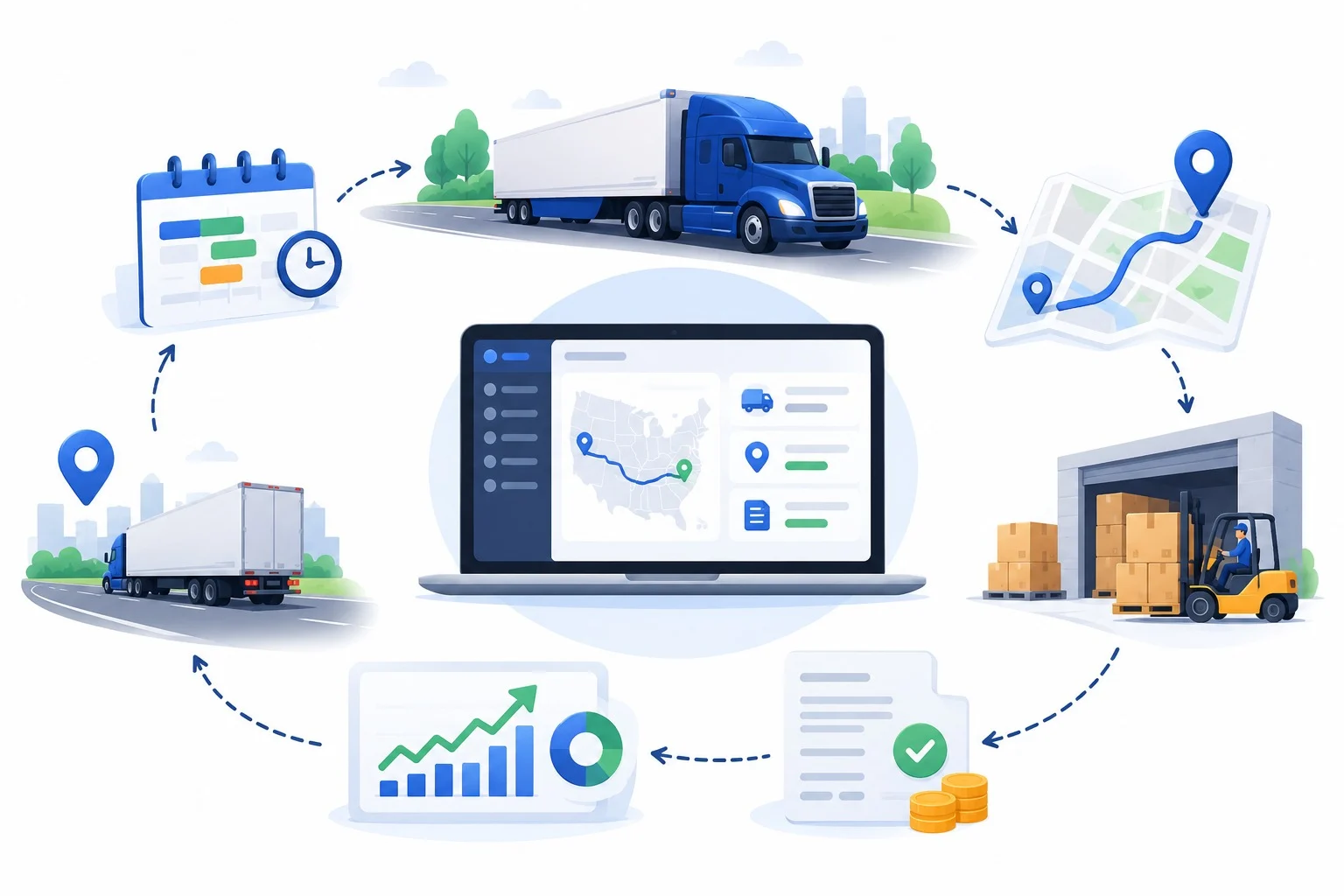
Simplify operations, automate repetitive work, and connect your business systems with custom software designed for trucking companies, freight brokers, and logistics providers across the United States.
US-based in MichiganWorks US & EU hoursScope agreed before build
Softlaunchers builds custom applications, intelligent workflow automations, and software integrations that help freight businesses address operational bottlenecks and get more value from their existing technology.
From freight document processing to TMS integrations and custom operational dashboards, we help you turn disconnected workflows into more efficient digital operations.
Systems we connect
TMS platforms
ELD & telematics
QuickBooks & accounting
Load boards
EDI 204 / 214 / 210
Document storage
The problem
Too Much Manual Work Is Slowing Down Your Logistics Operations
Running a trucking or logistics business involves coordinating loads, drivers, documents, customers, and financial records. When these processes rely on repetitive data entry and disconnected software, small inefficiencies can create larger operational bottlenecks.
Softlaunchers helps trucking companies and logistics providers identify opportunities to streamline workflows, connect business applications, and automate suitable administrative tasks.
Extracted fields
Load #LD-20417
ShipperMidwest Foods
PickupJoliet, IL
Rate$2,450.00
SignatureReview
Repetitive Freight Document Processing
Rate confirmations, bills of lading, proof of delivery documents, and invoices can require time-consuming manual review and data entry.
How we help: Build document-processing workflows that extract, validate, organize, and transfer information into supported business systems, with human review where required.
TMS
Accounting
Disconnected TMS and Accounting Systems
When transportation management and accounting platforms do not communicate effectively, teams may need to enter the same information multiple times or reconcile inconsistent records.
How we help: Develop API integrations and automated data workflows that help connected systems exchange agreed information more consistently.
Available
Assigned
In transit
Status update due
Driver check-in
Send POD to customer
Dispatch and Administrative Bottlenecks
Routine status updates, notifications, data entry, and operational follow-ups can take time away from more important work.
How we help: Automate suitable repetitive tasks using business rules, custom applications, and AI-assisted workflows.
Operations
Spreadsheets That Cannot Keep Up
As operations grow, spreadsheets and disconnected tools can become difficult to maintain, coordinate, and audit.
How we help: Develop custom dashboards, internal applications, and reporting tools that better support your operational requirements.
TMS
ELD
Accounting
Operations overview
Limited Visibility Across Business Systems
When important information is spread across multiple platforms, it can be difficult for teams to get a consistent picture of daily operations.
How we help: Connect supported data sources and build reporting interfaces that bring relevant operational information together.
Not sure which of these applies to you? Walk us through your current workflow.
Trucking & Logistics Software Development Services
Every transportation business has its own operational requirements. We build software, integrations, and automation workflows around the processes your business needs to improve.
Software Solutions for Trucking & Logistics Businesses Across the United States
Different transportation businesses face different operational challenges. We tailor our development and integration approach to your workflows, business systems, and technical requirements.
Document workflows
Trucking Companies & Motor Carriers
Support transportation operations with custom applications, administrative automation, document workflows, and connected business systems.
Improve information flow across transportation, customer service, accounting, and other operational functions through integrations and custom workflows.
A Software Development Partner for Your Logistics Operations
01
We Start With Your Business Problems
We work to understand your workflows, existing systems, operational challenges, and business objectives before recommending a technical solution.
02
We Work With Existing Software Where Possible
Replacing your entire technology stack is not always necessary. Where supported and practical, we can connect existing applications or improve the workflows around them.
03
We Build Around Your Requirements
Your dispatch, document processing, accounting, and reporting processes may differ from those of another transportation business. Our approach reflects your defined requirements rather than a one-size-fits-all template.
04
We Focus on Practical Automation
We identify where automation, integrations, and AI may provide value, and where human review or existing processes should remain in place.
05
We Define Scope Before Development
Clear requirements, agreed deliverables, integration specifications, and testing criteria help establish realistic expectations before implementation begins.
See how we approach software development, system integrations, and automation challenges. Each project explains the problem, the solution, the technology involved and verified outcomes where available.
For logistics-focused demonstrations, we can walk you through example workflows such as freight document extraction, transportation-to-accounting data synchronization, or automated shipment notifications.
No. Most projects work alongside the TMS, ELD and accounting tools you already use. We connect to them through their APIs or exports where they support it, and build only what is missing.
Which systems can you integrate with?
Common targets are TMS platforms, QuickBooks and other accounting software, ELD and telematics providers, load boards and EDI. Feasibility depends on each vendor’s API access, which we confirm during discovery.
How accurate is the AI document processing?
It depends on document quality and how much layouts vary. We set confidence thresholds so uncertain fields go to a person for review instead of straight into your system.
What software development services do you offer for trucking companies?
Softlaunchers offers custom software development, workflow automation, AI-assisted solutions, API integrations, operational dashboards, and web applications tailored to trucking and logistics business requirements.
Can you automate paperwork for a trucking company?
Yes. Supported workflows can be developed to extract information from freight documents, validate required fields, route documents, and transfer information into connected systems. Feasibility depends on document formats, business rules, integration access, and human review requirements.
Can you integrate a TMS with accounting software?
We can assess integrations between supported transportation management systems and accounting platforms based on available APIs, permissions, data structures, and business requirements. The discovery process determines the feasible approach.
Can you build custom dispatch software?
Yes. Custom dispatch applications and operational dashboards can be developed when the requirements justify bespoke software. Potential functionality includes load management, internal workflows, notifications, reporting, and integrations with existing systems.
What is the difference between custom logistics software and off-the-shelf software?
Off-the-shelf software offers predefined features for a broad customer base. Custom logistics software is designed around specific business processes and requirements. Custom development may be appropriate when existing platforms cannot adequately support a required workflow, but it introduces additional development and maintenance considerations.
How much does custom trucking software cost?
Cost depends on features, integration complexity, data requirements, security needs, and project scope. A focused automation or integration project can require substantially less work than a complete transportation management platform. A discovery assessment helps establish a realistic estimate.
How long does logistics software development take?
Timelines depend on project scope, technical complexity, integrations, testing requirements, and stakeholder availability. A delivery plan can be established after requirements and dependencies are understood.
Do you work with trucking companies across the United States?
Softlaunchers targets trucking companies, freight brokers, and logistics providers in the US market. Project availability, remote collaboration, and support arrangements can be confirmed during the initial consultation.
Can you automate workflows without replacing existing software?
In many cases, yes. Where existing platforms provide suitable APIs or other supported integration methods, we can connect them and improve information flow. Feasibility depends on the platforms, permissions, and workflow requirements.
How do we get started?
Tell us about your business, the software you currently use, the repetitive tasks you want to reduce, and the outcome you want to achieve. We can then discuss technical feasibility, scope, and potential next steps.
Let’s Solve Your Trucking & Logistics Software Challenges
Are manual processes slowing down your team? Do your systems struggle to share information? Or do you need custom software for a workflow your current tools cannot handle?
Tell us about your operation, the systems you use, and the challenges you want to solve. Softlaunchers can help you evaluate a practical approach to software development, workflow automation, and integrations for your logistics business.